

How to Find Competitor Backlinks Easily (and Steal Them)
Listen to this article
Browser-native voice. No account required.
If you think your competition is just the brand you’re salty about on Instagram, I’ve got news. Most people screw this up right out of the gate. You’re not competing with who you think - you’re competing with who’s ranking.
This is where how to find competitor backlinks actually begins. Before you sniff around anyone’s backlink profile, you need to know whose links are worth sniffing. That means identifying both direct search competitors and the sneaky indirect competitors you didn’t know were pulling traffic away from your own site.

Step 1: Google Knows More Than You Do
Type in your target keyword. Scroll past the ads. The sites hogging the top 10? Those are your direct search competitors. They're ranking for the same keywords you're trying to own. And they’re not doing it on charm. Their backlink profile is probably a fortress.
Don’t guess. Search. Confirm.
Step 2: Dig Deeper with Tools
Time to play dirty. Fire up Ahrefs, SEMrush, or even Ubersuggest if you’re broke but hopeful.
In Ahrefs, go to “Competing Domains” under Site Explorer. Enter your competitor’s domain and watch your real rivals spill out.
SEMrush? Use Domain vs. Domain to see keyword overlap. If they share a fat chunk of your target keywords, they’re in the arena with you.
Ubersuggest gives a decent overview too. Not enterprise-grade, but hey. It talks.
These tools also expose referring domains and backlink opportunities tied to each rival. You’re not just finding enemies. You’re mapping their support system and working towards your own SEO strategy.
Step 3: Don’t Forget the Sneaky Ones
Indirect competitors are the tricky bastards. They’re not selling what you sell, but they’re ranking where you should. Think bloggers, forums, directories, resource hubs or any site siphoning your target audience with topically relevant content.
They usually fly under the radar, but their competitors backlinks are gold. Why? Because they often have links from niche relevant websites you’re ignoring.
Step 4: Use the Related Operator Like a Wizard
Drop this in Google: related:yourdomain.com
This shows you sites that Google thinks are similar to yours aka algorithmically-confirmed search competitors. If you see a brand or blog you hadn’t considered, dig into their backlink profile too. Odds are, they’re stealing clicks and links right under your nose.
Audit Their Backlink Profile & Compete Smarter
This is where we flip the switch from “curious marketer” to “SEO hitman.” Once you've nailed down your competitors websites, it's time to tear through their backlink profile like you're defusing a bomb. Except the wires are links, and you’re stealing the detonator.
If you're still asking how to find competitors backlinks, this is the part where the curtain lifts.
Start with the Numbers but Don’t Be a Dumb Counter
You want more backlinks, sure. But not all backlinks are good backlinks. Some are digital herpes. Others are pure SEO fuel. Here’s what you actually need to measure:
Domain Authority (Moz) and Page Authority: Don’t worship these, but they’re solid proxies for trust.
Referring Domains: More unique linking domains = more credibility. If 100 backlinks come from 1 site, you’ve got a fanboy, not authority.
Anchor Text: This is where a lot of SEOs shoot themselves in the foot. Look at your competitor's site: are the anchors brand-heavy, exact-match, or spammy “cheap flights now!” garbage? Pattern tells intent. And risk.
Relevance: Are links coming from relevant websites or from weird coupon blogs in another language? If your dog food competitor has backlinks from a Belarusian casino forum…run.
Advanced Angle: Who’s Linking to Multiple Competitors?
Ahrefs’ Link Intersect tool is your best friend here. Input three of your search competitors. It spits out all the domains linking to multiple competitors but not to you.
Translation? These sites clearly love your niche. They’re already handing out SEO juice (you just haven’t asked). Yet.
These are the backlink opportunities most people miss because they’re too busy chasing single‑source links like amateurs.

Check Their Broken & Lost Backlinks
Now we get dirty.
Use Ahrefs or SEMrush to filter for lost backlinks and 404s.
Plug the referring page into Wayback Machine. See what content used to be there.
Make something better. Outreach and suggest it as a replacement.
This is competitor backlink analysis with real ROI. You’re not just watching; you’re stealing their clout and making it yours.
Red Flags to Catch
While you’re auditing their link profile, stay frosty for these traps:
Over-optimized anchor text on every page. Big penalty magnet.
Links from unrelated, low-authority, or spammy sites. If they got those on Fiverr, walk away.
A sudden spike in link velocity without new content. That’s probably link buying and you don’t want to replicate a ticking time bomb.
Replicate & Outperform in Link Building Strategy
This is where you stop taking notes and start taking names. Your competitors spent months, maybe years, building that pretty little backlink profile. You're going to rip it apart, borrow the best parts, and build a stronger one like a savage with a blueprint.
Forget “get inspired.” This is theft. Strategic, ethical, gloriously effective theft.
Step 1: Steal Their Best Links Not All Links
Pull their backlink report from Ahrefs or SEMrush. Export it. Highlight the referring domains that:
Have high domain authority
Are topically relevant to your niche
Use clean, natural anchor text
Come from relevant websites, not sketchy directories or spam mills
If it looks like a bad neighborhood, don’t walk in. You don’t want to inherit their SEO skeletons.
Then, filter for referring domains linking to multiple competitors. That’s your linking domain goldmine. These guys clearly have a type and it’s your niche.
Step 2: Use Broken Link Building Like a Pro
Broken link building is SEO’s version of dumpster diving but with Gucci results.
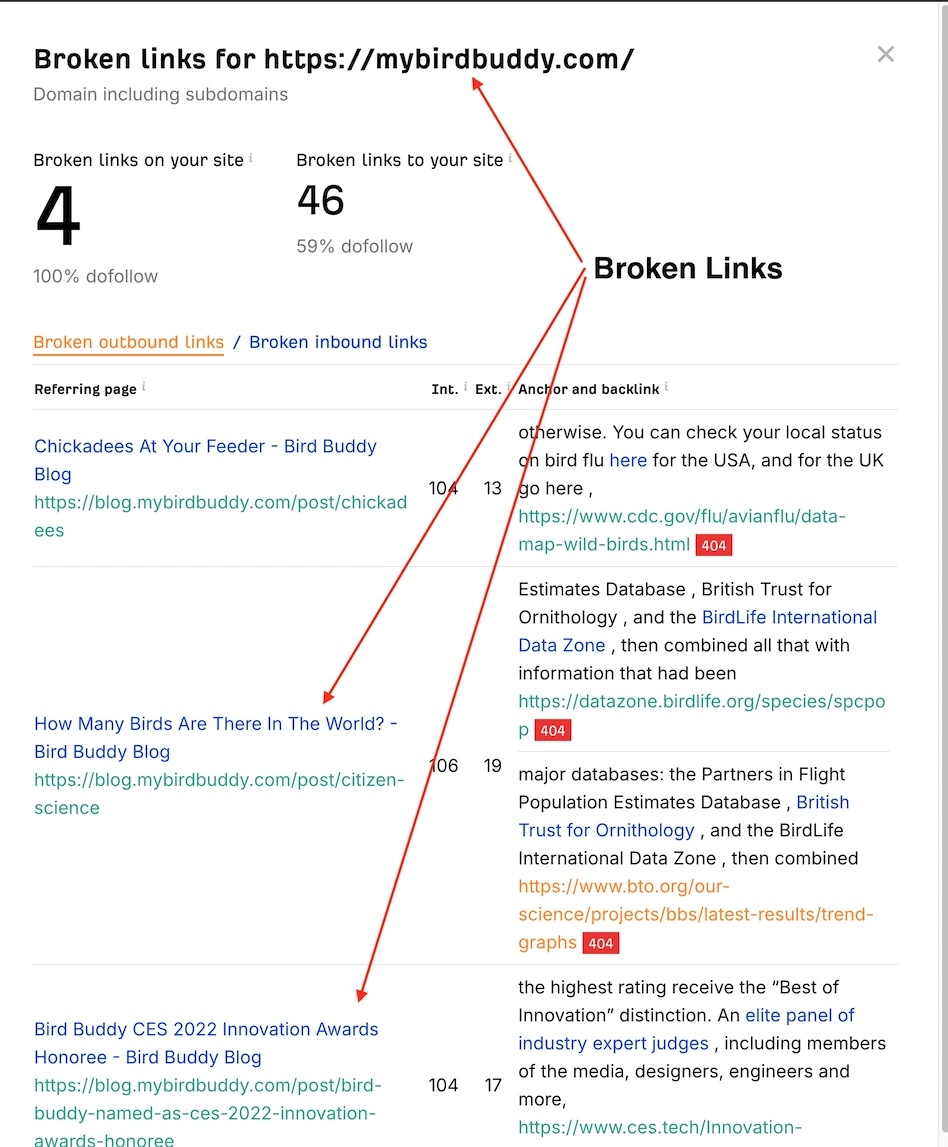
Go to Ahrefs Broken Link Checker and find broken links for for free.
Spot broken pages that used to earn high quality backlinks.
Check them on Wayback Machine. See what content was there.
Rebuild it. Make it 10x better. Outreach the linking sites with:
“Hey, I noticed you’re linking to a dead page on [Competitor]. I’ve got an up-to-date version covering [Topic] in more detail. Feel free to link if it helps your readers.”
No pitch. No BS. Just solve their broken link problem and become the hero.
Step 3: Guest Post (but Don’t Be Boring)
Yeah, guest posting still works. But no one cares about “Top 10 Productivity Hacks.” Stop writing SEO mulch.
Pitch high domain authority blogs in your niche.
Bring unique data, spicy opinions, or visual assets (charts, infographics).
Link naturally to your own site in the bio or body. No keyword stuffing.
This isn’t about link dumps. It’s about showing up as the authority.
Step 4: Win with Better Content, Not Just Outreach
Some link building tactics are slow because your content sucks.
Look at your competitors’ most linked pages. Ask: why are people linking?
Then go build something better. More useful. More visual. More up-to-date.
Use stats. Use expert quotes. Use original insight.
Want more backlinks? Create linkable assets worth referencing. Think ultimate guides, interactive tools, niche data, case studies, or even a full content marketing campaign.
Step 5: Use Image Link Recovery (reverse Image Search)
Your competitors are probably getting passive backlinks from images, especially infographics.
Do a reverse image search (Google Images or TinEye) on their visual content. If a site is using the image without a link, offer a better one and request a backlink.
Better yet: create visuals so good, people link just to look smarter.
Your competitors aren't magical. They're just earlier. You're better.
Tool Mix & Budget-Friendly Backlink Checker Tool Options
Let’s be real: most of the “how to find competitors backlinks” advice out there is like telling someone to buy a Ferrari to learn how to drive. You don’t need a $400/month subscription to spy on your competitor’s domain. But yeah, it helps.
Here’s how to mix premium firepower with budget tools (and a little hustle) to do solid competitor backlink analysis whether you’re bootstrapped or backed.

Premium Tools (if You’re Swimming in Budget)
These are the heavy hitters. Expensive? Yes. Worth it? Also yes.
Ahrefs - Gold standard for backlink analysis. Massive index, insane detail. Use “Site Explorer” → drop in your competitor’s site → pull their referring domains, see anchor text, sort by domain authority, and you’ve got their soul.
SEMrush - Strong for comparisons. The Backlink Gap Tool lets you see who’s linking to multiple search competitors but not you. Pure ROI.
Moz Link Explorer -Simpler, but still shows referring domains, page authority, and linking domains. Good for quick reads and new SEOs.
Budget / Freemium Tools (still Dangerous)
Now we’re cooking on ramen. These tools won’t give you everything, but they’ll expose enough of your competitors backlinks to play the game.
Ubersuggest - From Neil Patel’s empire of SaaS and sarcasm. Decent backlink checker, shows anchor text, backlink data, and linking domains. Limited on free tier, but useful.
SEO SpyGlass (from Link-Assistant) - Desktop tool. Great if you’re tracking your own backlinks and your enemies’. Cheaper than Ahrefs. Decent for backlink profile analysis without needing a cloud account.
OpenLinkProfiler - Free. Ugly. But finds external backlinks from their database. Good for discovering weird backlinks your competitors websites are hiding in.
Google Search Operators - Not a tool per se, but a weapon.
Example: link:competitor.com -site:competitor.com
It’s limited, outdated, but good for quick reality checks.
Trial & Pillage Strategy
Most premium tools have 7–30 day trials. If you’ve got time and caffeine:
Sign up.
Go full forensic analyst.
Export everything: backlink data, referring pages, anchor text, page authority.
Cancel before it charges you.
Boom. Budget SEO, executed like a savage.
Real Examples + Winner Templates to Use
You don’t need another lecture about link building strategy. You need to see it done. So let’s do that.
We’ll take a competitor's backlink profile, rip it apart, and show you how to turn it into your win.
Real Example: the Organic Dog Food Beatdown
Say you run healthyhoundkitchen.com- a pet food ecommerce site. Your search competitors include:
organicanimal.com
dogwellnessdaily.org
rawpaws.net
You plug them into Ahrefs. Here’s what you find:
Referring domains: All three have links from pawhub.blog, greenvetjournal.com, and petloversweekly.com.
Backlink Gap (via SEMrush): healthyhoundkitchen.com has 0 links from those three sites. That’s a problem.
Anchor text on the competitor backlinks: “best organic dog food brands”, “pet food nutrition studies”, “top dog food for allergies”
🔍 That’s a signal. Those are target keywords driving high quality backlinks.
Here’s how you beat them:
Write a 2025 Guide to “Vet-Approved Organic Dog Food”
Include visuals, data, expert quotes
Email those 3 linking domains and offer your guide as an updated resource
Bonus: Check if any of their links are pointing to 404s (broken pages) on your competitors websites then offer your content as the fix
Template: Backlink Tracker Spreadsheet
Don’t overthink it. Open a sheet, and track your moves like a general at war:
Color code it if you’re fancy. Or just get it done.
Monitoring & Evolving Backlink Strategy
If you think link building is a one‑time job, you’re not doing SEO, you’re doing wishful thinking. Your competitors aren’t sitting around. They’re out there stacking high quality backlinks, replacing broken ones, and stealing your lunch with every new referring domain they pick up.
This is where the real SEO strategy kicks in. You need to watch them like a hawk and adapt like a savage.
Set Up Backlink Alerts (yes, Like a Stalker)
You want to know the second your competitors land a juicy backlink? Set up alerts.
Ahrefs Alerts: Track new/lost backlinks by domain or URL.
SEMrush Backlink Audit + Alerts: Get emails when competitors websites gain or lose links.
BuzzSumo: Use “backlink alerts” on a competitor's domain or even a keyword topic.
Google Alerts: Free and simple. Monitor your own site brand name, product names, or even competitor mentions.
This way, you catch backlink trends in real time. Like finding out your ex got married just faster.
Track Lost Links (yours and Theirs)
Use Ahrefs or SEMrush to:
Find lost backlinks from your own backlink profile. Reclaim them with updated links or redirects.
Monitor competitors backlinks that disappear. If a referring page goes 404, that’s your in. Rebuild what was lost, and offer it to the site that used to link them.
Lost links are like unattended luggage. Pick it up before someone else does.
Analyze Link Velocity and Patterns
SEO isn’t just what links you have - it’s how fast you get them. Sudden bursts of backlinks from shady linking domains? That’s a sign someone’s buying links and may be on Google’s hit list.
Use charts from Ahrefs to:
Track link growth over time for multiple competitors
Spot suspicious spikes (aka black hat nonsense)
Reverse-engineer content that earned legitimate link opportunities
Watch the wave and ride it. Don’t paddle like a fool against the tide.
Refresh Your Own Content Regularly
If your backlinks point to content written during the Obama administration, update it. New stats, better visuals, deeper insight. Then, reach out to your linking domains and say:
“Hey, just updated this post with new 2025 data. Might be worth revisiting if you want to keep your resources fresh.”
Nobody wants to link to digital fossils.
Common Mistakes, Savage Warnings & What NOT to Do
You can do everything right and still lose if you're copying losers. That’s why smart competitor backlink analysis includes knowing what to avoid. Your goal isn't to mimic garbage. It's to dominate.
Let’s walk through the most facepalm-worthy errors in backlink land. If you're doing any of this, stop. Yesterday.
Mistake #1: Relying on One Tool Like It's the Bible
If you only use Ahrefs, you’re seeing one slice of the web. A good one, sure but partial. SEMrush, Moz Link Explorer, even Ubersuggest all pull different backlink data.
Savage truth: One backlink checker tool = one version of the truth. Combine three, and now you’re dangerous.
Mistake #2: Ignoring Backlink Quality
Let me say this again: not all backlinks are good. In fact, most are trash. If you blindly replicate a competitor’s links without looking at domain authority, page authority, and relevance, you might be building a link farm to nowhere.
Avoid:
Foreign casino sites
Footer links on shady directories
PBNs dressed in Squarespace
If the referring domain looks like it was built in 2004 and hasn’t been updated since... walk away.
Mistake #3: over-Optimizing Anchor Text Like It’s 2010
Too many exact-match anchors = Google side-eye.
Diversify with:
Branded anchors (“Healthy Hound Kitchen”)
Natural phrases (“this guide” or “more here”)
Partial-match anchors with semantically relevant terms
If every backlink says “best cheap organic dog food USA 2025” … congratulations, you just wrote your own penalty notice.
Mistake #4: Copying Links from Irrelevant Niches
Just because a link helped a competitor's site doesn’t mean it’ll help yours. Context matters.
You're a SaaS startup? Why are you replicating links from a baking blog that linked to your competitor because they sponsored a cookie recipe?
The same sites won’t work for you unless they serve the same niche. Stop forcing it.
Mistake #5: Not Monitoring What You Built
You spent weeks doing outreach. You landed 20 high domain authority links. And then you forgot about them.
Links rot. Pages get deleted. Domains expire. Your own backlinks can vanish without a whisper.
Set alerts. Do monthly audits. Protect what you earn.
SEO Tie-Ins - How Backlink Strategy Powers Rankings
You want traffic, leads, conversions - cool! But if your backlink strategy isn’t tied into your broader SEO strategy, you're building a house with no foundation. Or worse: on someone else’s lawn.
This is where your competitor backlink analysis becomes more than a voyeur session - it turns into strategic leverage that shifts your entire site’s authority.
Why Backlinks Still Dominate
Google's still using backlink profiles as a top‑tier ranking factor. Don’t believe me? Ask John Mueller. Every update since Penguin just got better at filtering quality links, not eliminating their power.
The right high quality backlinks signal:
Authority
Relevance
Trust
Popularity
And they push your search engine rankings higher than any “content is king” fluff alone.
How Relevant Websites Multiply Your Topical Authority
When relevant websites link to your own site, they’re essentially voting for your expertise in a given topic.
The more semantically aligned those linking domains are to your niche, the more Google sees your site as a central entity. That’s entity stacking in action.
You want to be the answer. That’s how you show up in Featured Snippets, People Also Ask, and own the search engine results.
Internal Linking + Backlinks = Power Combo
What happens when a referring domain links to a page on your site and that page is internally linked to your other key assets?
Link equity flows deeper.
Your own backlinks pull up your entire architecture.
Your topic cluster gets stronger.
One external link, used smart, can juice multiple pages if you’ve done your internal linking like a pro.
Clean Up Your Technical SEO so Links Matter
Don’t waste good backlinks on a broken website. Make sure you’ve handled the basics with a technical SEO audit before sending more link equity to dead pages.:
Pages load fast
Mobile UX is clean
Canonicals are correct
301s are in place for moved content
A strong backlink profile pointing to a site with crawl issues? That’s like fueling a car with no wheels.
Wrap-Up & Action Plan
Let’s cut the fluff: most people will read about how to find competitors backlinks, nod their heads, maybe run one report and never build a single link.
Not you.
You’ve now got a no-BS blueprint for executing competitor backlink analysis, reverse-engineering every competitor’s site, and building a stronger, smarter backlink profile that doesn’t just compete – it embarrasses. If you want a more comprehensive approach that ties it all together, consider a full link building campaign to scale this process.
Here’s your war map:
The Savage SEO Backlink Playbook
Find your real competitors using Google, Ahrefs, and SEMrush. Ignore who you “think” your competitors are.
Analyze their backlink profile: Look at referring domains, domain authority, anchor text, relevance, and link types.
Identify backlink gaps: Spot the domains linking to multiple competitors but not to you. These are your easy wins.
Steal their best links: Replicate legit ones, dodge trash ones. Focus on high quality backlinks from relevant websites.
Use broken links to your advantage: Rebuild what’s gone. Offer better. Be faster.
Build real content worth linking to: Not generic. Not templated. Not the 45th “Ultimate Guide to X.”
Outreach without begging: Use templates that respect people’s time and add value.
Monitor and protect: Set backlink alerts. Run audits. Track your own backlinks and the competition’s.
Tie it all to your SEO strategy: Make sure every link supports internal structure, technical SEO, and topical authority.
This is how you go from “meh” to dominating search engine results in a matter of weeks not years.
Now Do Something About It
You’ve got the tactics, the tools, the templates, and the traps to avoid.
Your competitors backlinks are out there. Your future backlink profile is waiting. Your SEO strategy is now armed to the teeth.
Next step? Take one domain. Run one tool. Find one link opportunity. Outreach today.
That’s how you build a backlink empire. Mojo style.
Frequently Asked Questions
What are competitor backlinks?
They’re the receipts showing who’s helping your competition rank. Every time a relevant website links to your competitor, it’s a vote of trust and a backlink you might be able to steal with better content and sharper outreach.
How do I find competitor backlinks for free?
Skip the shiny dashboards. Ubersuggest, OpenLinkProfiler, and even Google search operators like site:competitor.com "guest post" give you a backdoor into their backlink profile, no credit card required.
What metrics matter in backlink analysis?
Think quality over chaos. Check how many referring domains they’ve got, how strong those sites are (domain authority), what kind of anchor text is being used, and whether those links actually come from websites that belong in your niche not a Russian wallpaper blog.
How can I find backlinks my competitors have but I don’t?
Use a link gap tool in Ahrefs or SEMrush. It’s like holding a mirror up to their link building strategy and seeing exactly which sites are linking to multiple competitors but ghosting you. That’s your hit list.
Is copying competitor backlinks safe?
If you copy smart, yes. Don’t chase trash links or PBNs. Find their valuable backlinks, recreate the content that earned them (but better), and approach the linking domain like someone offering value not begging for a handout.
How often should I monitor competitors’ backlinks?
Set it and forget it? Nope. Track them monthly at a minimum. If you’re in a hot niche, go weekly. Backlinks age, vanish, and appear faster than you think and whoever sees it first gets the advantage.
Bart Magera
Founder of Mojo Links. 10+ years in SEO across YMYL verticals.
Related posts
Keep reading on adjacent topics.

The Perfect Backlink Audit Guide - Do It the Right Way
Think your backlinks are helping you? Prove it. Most websites are sitting on a pile of link rot. Old junk. Toxic links. Stuff search engines side-eye while tanking your search rankings behind the scenes. This backlink audit guide is not a theory lesson. It’s your hands-on…

Link Building Statistics 2025: 50 Data Points SEOs Can’t Ignore (unless They Want to Stay Broke)
Forget what some AI bro told you in a Discord.Backlinks still matter. They always did. Despite Google’s PR spin about "great content" and "helpful updates," every serious SEO knows the game runs on links. Real links. From real sites. With real authority. The difference now? It’s…
How to Check Backlinks Manually (yes, Without a Damn Tool)
Wondering how to check backlinks manually? Good. Because while everyone's busy worshipping overpriced SEO tools, you're about to learn how to do it the real way - eyes on source code, fingers on keyboard, no AI fluff or fake numbers. If there's a backlink out there pointing to…
Want this kind of analysis on your site?
Get a free video walkthrough within 48 hours covering technical health, backlinks, content gaps, and AI visibility.